Headnote
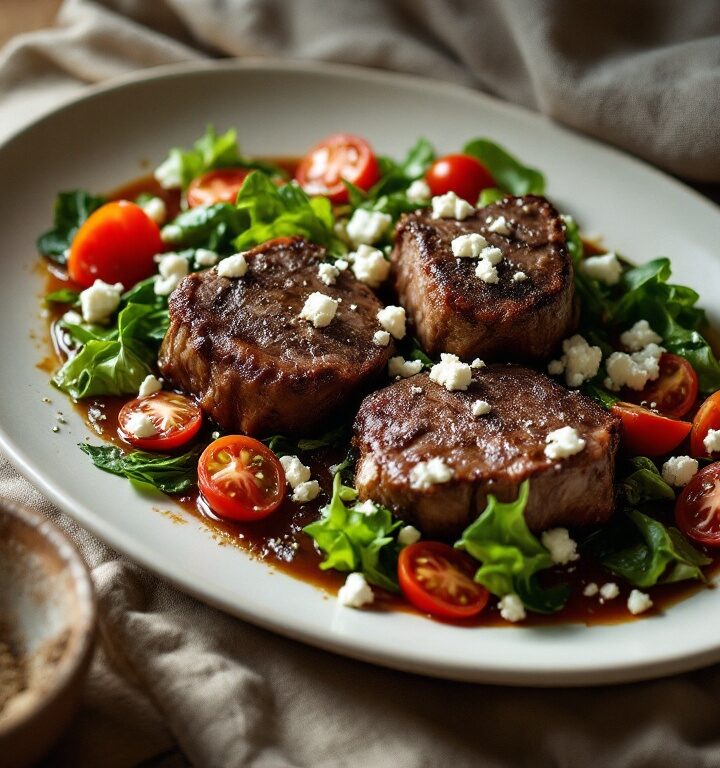
Lamb shanks are forgiving in a way that lamb chops are not. You can walk away from them. The collagen in the shank does the work while you read something else, and forty-five minutes later the meat is pulling away from the bone on its own terms. This recipe takes that braised shank and does something slightly unconventional with it: the cooking liquid is reduced to a sharp, thyme-forward dressing, and the whole thing lands on a bed of escarole that wilts just enough under the heat. The cider vinegar cuts the fat cleanly. The feta, scattered at the end, gives salt and a certain milky coolness. It is a warm salad the way a serious dish is a salad: structured, filling, and not apologetic about it.
At a glance
| | |
|—|—|
| Total time | 2 hrs 50 min (20 min active, 2.5 hrs passive) |
| Servings | 4 |
| Difficulty | Intermediate |
| Key technique | Fond reduction as dressing base |
Ingredients
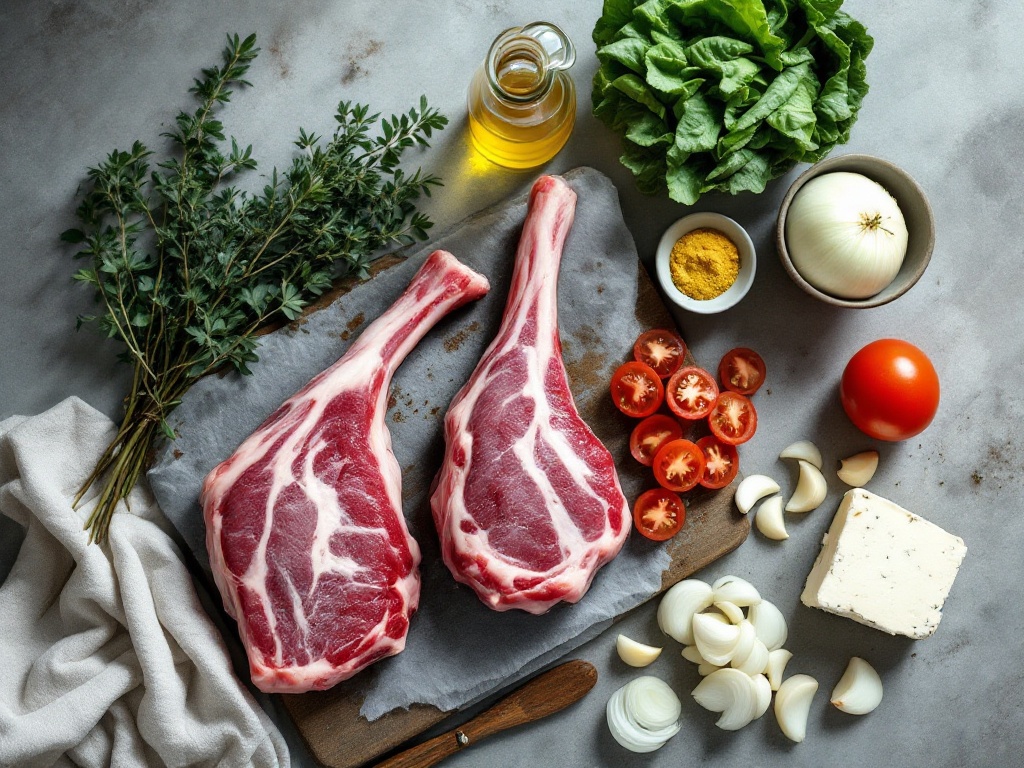
Lamb and braise
- 4 lamb shanks (roughly 400 g / 14 oz each)
- ¼ tsp fine salt, plus more for seasoning the fond
- Freshly ground black pepper
- 1 Tbsp olive oil
Aromatics and dressing base
- 1 large onion, thinly sliced
- 2 cloves garlic, finely chopped
- 2 tsp fresh thyme leaves (or ½ tsp dried)
- ¾ tsp dry mustard powder
- 80 ml (⅓ cup) cider vinegar
Salad assembly
- 450 g (1 lb) escarole, about 1 head, trimmed, washed, dried, cut crosswise into 2.5 cm (1-inch) strips
- 1 large ripe tomato, cored, cut into thin wedges
- 45 g (1½ oz) feta cheese, crumbled
Ingredient notes
Escarole. A variety of endive with broader, less bitter leaves than Belgian endive or radicchio. The outer leaves are more bitter; the pale inner leaves are sweeter. Use both. If you cannot find escarole, chicory or curly endive works; both hold their texture under the warm dressing better than baby spinach, which would collapse entirely.
Dry mustard. Not Dijon, not grainy. The dry powder disperses into the braising liquid and emulsifies the dressing as you reduce it, in the same way a French vinaigrette relies on emulsifiers. Coleman's is the standard available brand in France and the UK; in Pakistan or wherever you are sourcing, any fine-ground mustard powder is fine.
Cider vinegar. The acidity here is the hinge of the dish. It lifts the lamb fat. Apple cider vinegar (not sweetened drinking vinegar) is what you want. Sherry vinegar or white wine vinegar are acceptable substitutes but read differently on the palate.
Feta. Use a block-style feta packed in brine rather than pre-crumbled. Pre-crumbled is drier, saltier, and loses the slight creaminess that balances the vinegar.
Method
- Season the shanks. Pat the lamb shanks dry with kitchen paper. Season all surfaces with salt and a generous amount of black pepper. Drying the surface before searing is not optional; moisture on the meat steams the surface and prevents browning.
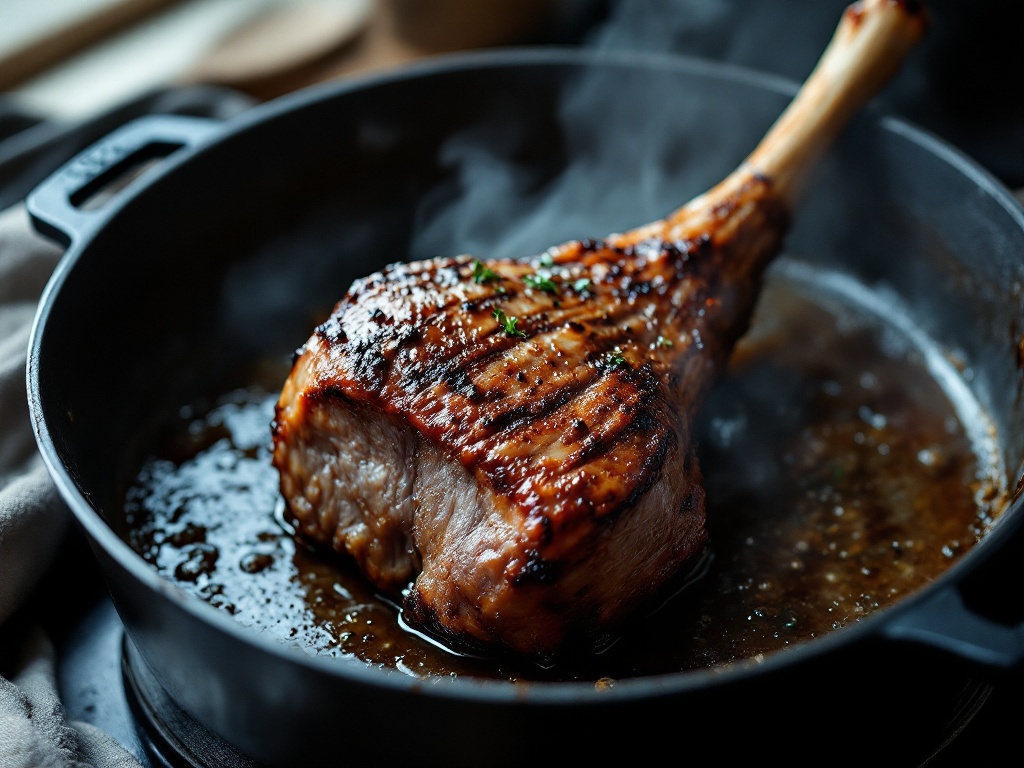
- Sear until deep mahogany. Heat the olive oil in a large, heavy casserole or Dutch oven over medium-high heat. When the oil shimmers, add the shanks two at a time. Sear for 4 to 5 minutes per side without moving them, until the surface is deep mahogany, not amber. Amber is a Maillard reaction that has not gone far enough; you want proper colour for depth in the final dressing. Remove and set aside.
- Soften the onion. Reduce heat to medium. Add the sliced onion to the same pan with all its residual fat. Cook, stirring occasionally, for 10 to 12 minutes until the onion is soft and just beginning to colour at the edges.
- Add garlic, thyme, mustard. Add the garlic and cook for 90 seconds until fragrant. Add the thyme leaves and dry mustard. Stir for 30 seconds. The mustard powder will toast very slightly and lose its raw sharpness.
- Deglaze with cider vinegar. Pour in the cider vinegar and scrape the bottom of the pan with a wooden spoon to lift the fond. This fond is where the dressing will come from. Let it bubble for 1 minute.
- Return the shanks and braise. Nestle the shanks back into the casserole. Add 240 ml (1 cup) of water. Bring to a gentle simmer, cover tightly, and cook over low heat for 2 to 2.5 hours. The meat should be pulling away from the bone and offering no resistance when prodded. Check every 45 minutes; if the liquid drops below 1 cm (½ inch) in the pan, add a splash of water.
- Rest and skim. Remove the shanks and let them rest on a plate, covered loosely. Skim any visible fat from the surface of the braising liquid. This is easier if you tilt the pot slightly.
- Reduce the dressing. Bring the remaining braising liquid to a boil over medium-high heat. Reduce for 5 to 8 minutes until it thickens slightly and coats the back of a spoon. Taste. Correct for salt. This is your dressing.
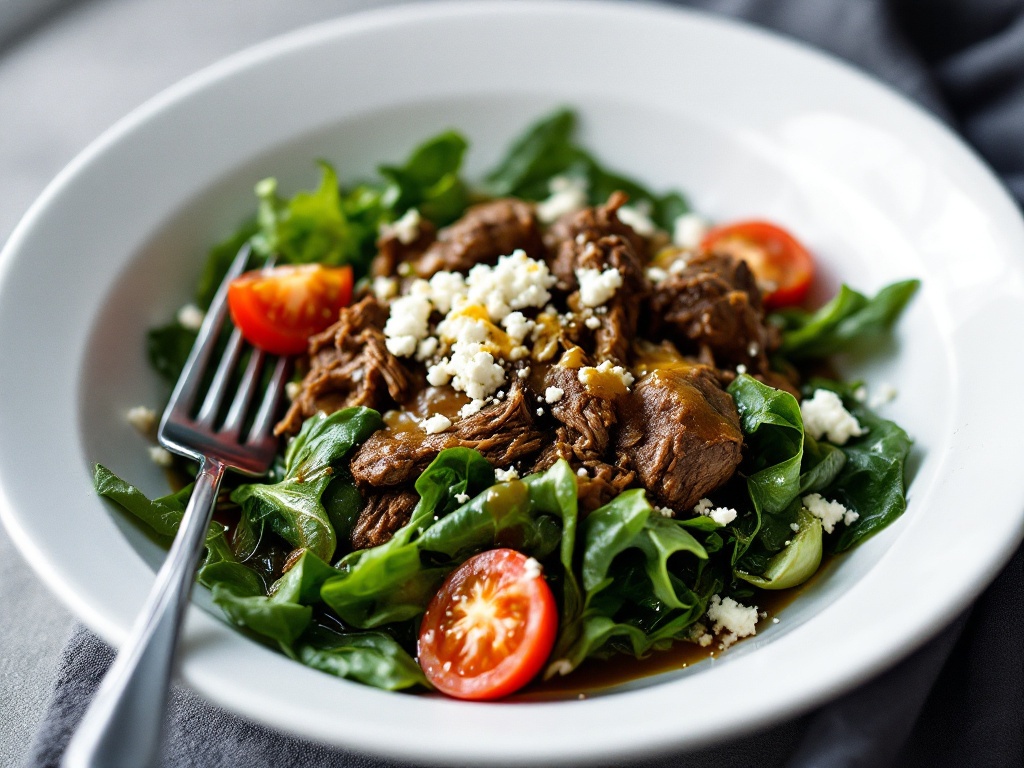
- Assemble. Place the escarole in a large serving bowl or on a wide platter. Scatter the tomato wedges over. Remove the lamb meat from the bones in large pieces and arrange over the greens. Pour the hot dressing over everything immediately. The heat will wilt the escarole partially, which is what you want: some texture remaining, some softness at the edges.
- Finish with feta. Crumble the feta over the top. Serve within ten minutes; this dish does not wait gracefully.
Variations
Cheaper cut. Bone-in lamb shoulder pieces or lamb neck work in place of shanks and cost noticeably less. The braise time remains the same. The meat shreds rather than coming off in clean pieces, which changes the texture of the salad but not the flavour.
Different bitter green. Curly endive or chicory replaces escarole directly. Radicchio is more bitter and more dramatic looking; it works but holds a slight metallic note against the lamb that not everyone likes. Chard, with its stems removed, is milder and softer.
Olive addition. Twelve to fifteen Kalamata olives, pitted and roughly chopped, added at the assembly stage, push the flavour further toward the eastern Mediterranean. They also add enough salt that you may want to reduce the feta quantity.
Warm spice variation. Add ½ tsp each of ground cumin and ground coriander with the garlic in step 4. This is not a French move; it is a sensible one if you want the dish to sit closer to a Moroccan register than a Provençal one.
Storage and reheating
Store the braised lamb and dressing separately from the greens in sealed containers in the refrigerator. Lamb keeps for up to three days; the dressing keeps for three days. The assembled salad with dressed escarole does not store usefully; the greens become unpleasantly soft.
To reheat: warm the lamb pieces in a covered pan over low heat with a tablespoon of water for 4 to 5 minutes. Reheat the dressing separately in a small saucepan. Assemble fresh on new greens.
Lamb shanks freeze well. Wrap individually in foil then place in a freezer bag; use within two months. Defrost overnight in the refrigerator.
FAQ
Can I do the braise in an oven instead of on the stovetop?
Yes. After step 5, cover the casserole and place in an oven preheated to 160°C (325°F). Braise for 2.5 hours. The gentler, enveloping oven heat produces slightly more even results than stovetop low, and you are less likely to scorch the bottom.
My lamb shanks are very large. Does the braise time change?
If each shank is over 500 g (about 18 oz), add 30 minutes to the braise time and check for doneness by pressing the meat near the bone; it should yield with no resistance and show visible separation from the bone.
The dressing reduced too far and became sticky. What do I do?
Add water, one tablespoon at a time, off the heat, and stir. It will loosen. If it has caramelized to the point of bitterness, balance it with a small additional splash of cider vinegar and a teaspoon of water.
Can I use dried thyme instead of fresh?
Yes. Use ½ tsp dried thyme in place of 2 tsp fresh. Dried thyme goes in at the same step; it releases its oils in the fat alongside the garlic. Fresh thyme added at step 4 and dried thyme added at step 4 behave the same way here because both are being bloomed in the residual fat.
Is cider vinegar the same as apple cider vinegar?
For cooking purposes, yes. Both are fermented from apple must. Avoid anything labelled "drinking vinegar" or sweetened apple cider vinegar, which have added sugar and will make the dressing cloying.
How do I know the escarole is the right texture after dressing?
You want the escarole to be about 30 seconds past raw: slightly softened, no longer completely crisp, but still with structure. If you pour a truly hot dressing over it and wait two minutes before serving, it will be approximately there. If your dressing has cooled below 70°C (160°F) by the time you use it, briefly reheat it.
Can this be made ahead for guests?
Braise the lamb up to two days ahead; refrigerate. Reduce the dressing and refrigerate separately. On the day, reheat both, then assemble. The salad itself must be assembled at the last moment.