Headnote
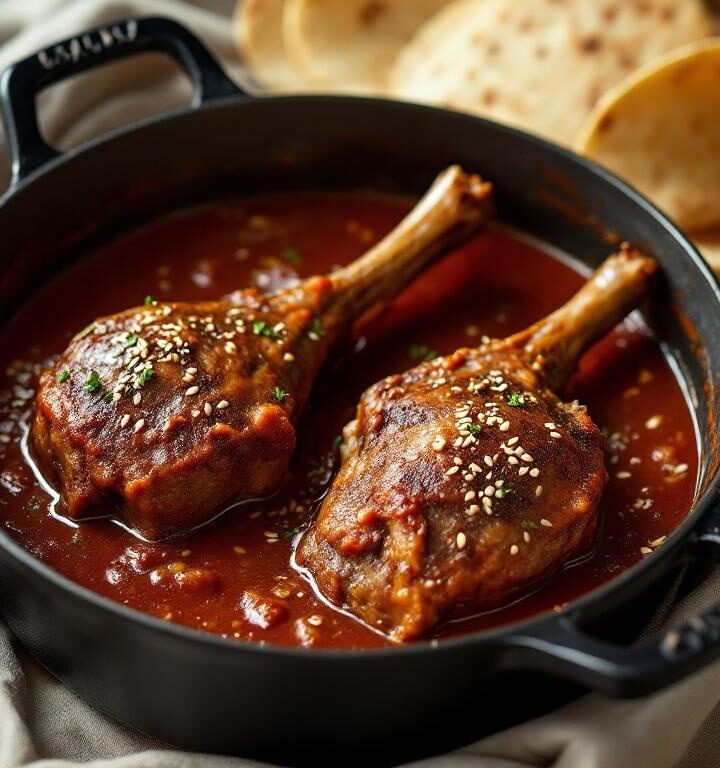
Mole is one of the few sauces in the world that takes longer to describe than it does to make. This version pulls from the red mole tradition of Oaxaca: dried chipotle for smoke, pasilla for depth, roasted plum tomatoes for body, and a small amount of Mexican chocolate at the end that rounds everything out without making it taste like dessert. The French technique that earns its place here is the braise. Sear the lamb hard, build the sauce in the same pan, then let heat and time do the work. Four lamb shanks or a bone-in shoulder both work; the shoulder is cheaper and the shanks plate more neatly. The chocolate goes in at the end, not the beginning, because heat destroys the volatile compounds that make good chocolate interesting. Get that part right and the sauce will have a low, resonant finish that a sauce without it simply does not.
At a glance
| | |
|—|—|
| Total time | 2 hrs 45 min (30 min active) |
| Servings | 4 |
| Difficulty | Moderate |
| Key technique | Hard sear + low braise, chocolate finished off heat |
Ingredients
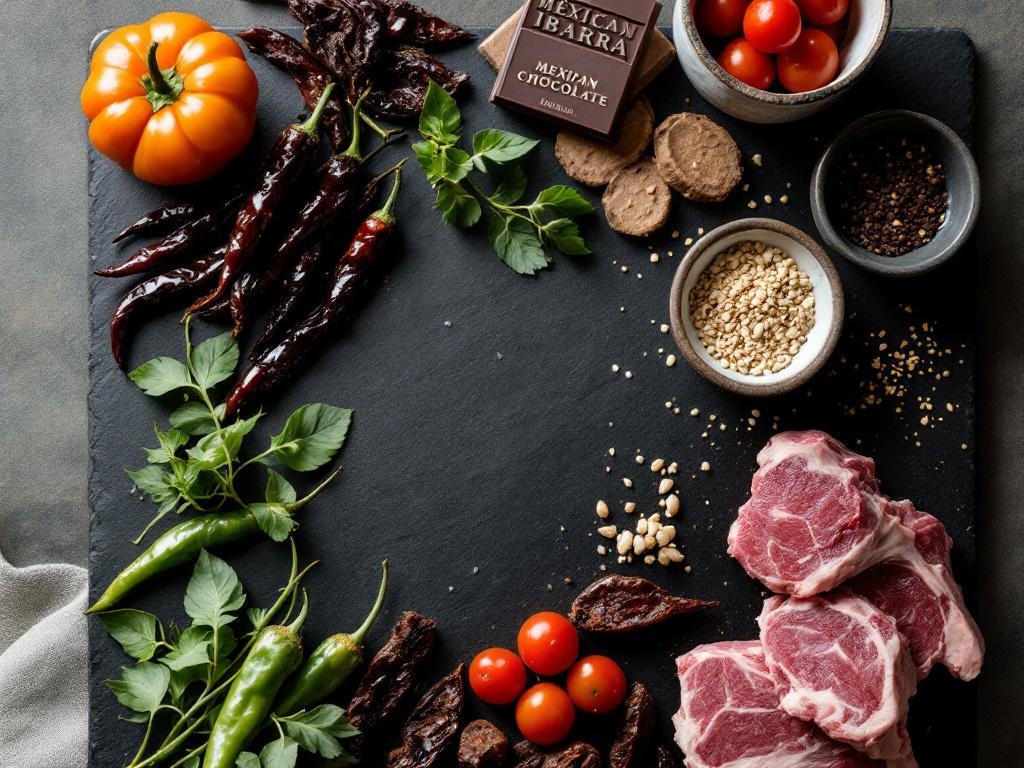
Mole sauce
- 2 chipotle peppers, dried
- 2 pasilla peppers, roasted and seeded
- 8 plum tomatoes, roasted
- 3 cloves garlic, roasted
- 1 tsp dried oregano
- 1 tsp ground cinnamon
- 1 tbsp sesame seeds, toasted
- ½ tsp black pepper
- 240 ml (8 oz) tomato sauce
- 42 g (1½ oz) Mexican chocolate, roughly chopped
- ½ tsp fine salt
- 2 tbsp canola oil
Lamb
- 4 lamb shanks (or 1 bone-in lamb shoulder, approx. 1.4 kg / 3 lb)
- Fine salt and black pepper
- 3 tbsp canola oil
Ingredient notes
Chipotle peppers (dried): Dried chipotles are smoke-dried jalapeños. Not chipotle in adobo — those are canned in a tomato-vinegar sauce and will push this too acidic. If you can only find the canned version, use one pepper and rinse it. Dried chipotles are available in any Middle Eastern grocery that stocks Latin American products, and reliably online.
Pasilla peppers: Long, narrow, near-black dried chillis with raisin and coffee notes. Often mislabeled as "mulato" in European shops. The genuine article has a wrinkled skin and smells faintly of dried fruit. If you cannot source them, ancho peppers are the closest substitute — broader flavor, slightly less complexity, still correct.
Mexican chocolate: Tablet-style chocolate sold under brands like Ibarra or Abuelita. It contains sugar, cinnamon, and ground almonds in addition to cocoa, which is why it behaves differently in a sauce than plain dark chocolate. If you substitute 70% dark chocolate, reduce the cinnamon in the sauce by half and add 1 tsp of sugar, or the sauce will finish bitter.
Sesame seeds: Toast them dry in a small pan for two minutes before using. Untoasted sesame seeds taste like nothing in this context.
Method
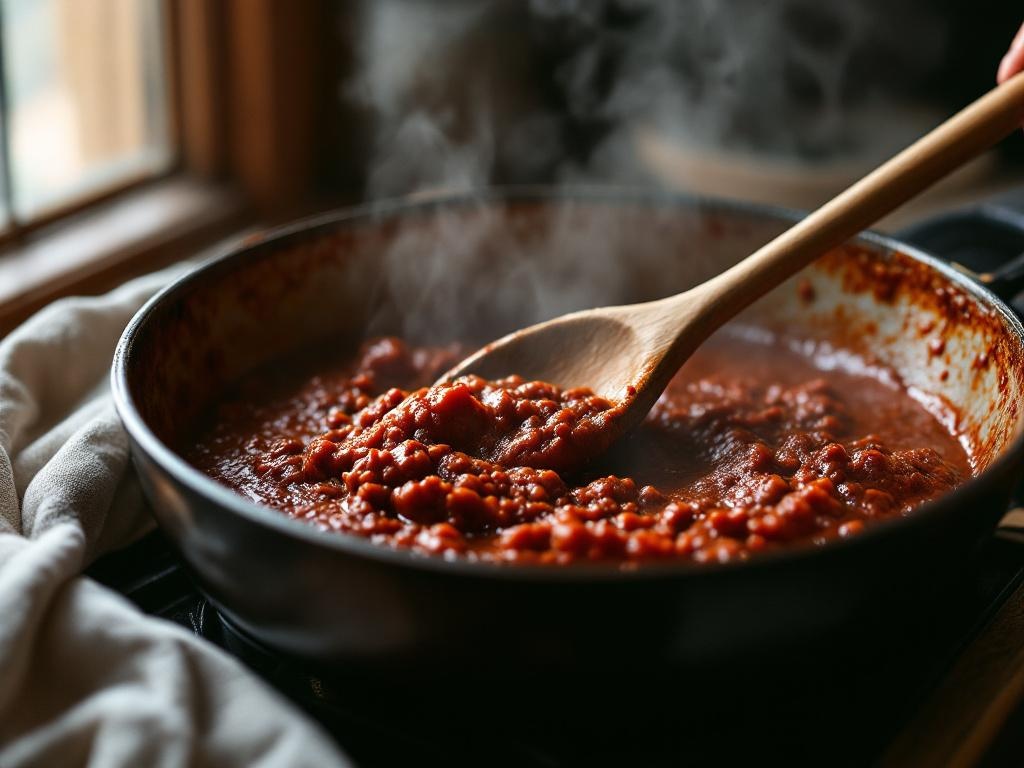
- Rehydrate and prepare the chipotles. Place the dried chipotle peppers in a small bowl and cover with just-boiled water. Leave for 20 minutes until pliable. Drain, stem, and tear them open to remove the seeds if you want less heat (the seeds are where most of it lives). The soaking liquid is bitter; discard it.
- Roast the tomatoes, garlic, and pasilla peppers if not already done. Place plum tomatoes and unpeeled garlic cloves on a dry cast-iron or heavy skillet over high heat. Turn occasionally until the skins are charred in patches and the flesh has softened, about 10 minutes. Remove the garlic and squeeze the flesh from the skins. For the pasilla peppers, press them flat onto the dry skillet for 15 to 20 seconds per side until they blister and become fragrant. Do not let them blacken fully — they will turn acrid.
- Make the mole base. Combine the rehydrated chipotles, roasted pasilla peppers (stemmed and seeded), roasted tomatoes, roasted garlic flesh, oregano, cinnamon, toasted sesame seeds, black pepper, and tomato sauce in a blender. Blend on high until completely smooth, 60 to 90 seconds. A coarse sauce here means a coarse sauce on the plate; do not rush this step.
- Fry the mole. Heat 2 tbsp canola oil in a wide, heavy-bottomed pot (a Dutch oven is ideal) over medium-high heat until shimmering. Pour the blended mole into the hot oil and stand back — it will spit. Fry, stirring frequently, for 8 minutes. The mole goes from bright red-orange to a deeper, rust-brick color. This frying step concentrates the flavors and removes the raw pepper taste. Season with ½ tsp salt. Set aside.
- Sear the lamb. Season the shanks generously with salt and pepper on all sides. Heat 3 tbsp canola oil in the same Dutch oven over high heat until almost smoking. Sear the shanks in batches — do not crowd them — for 3 to 4 minutes per side until deep mahogany, not just brown. This is not cosmetic; the Maillard crust contributes flavor compounds that the mole cannot supply on its own.
- Braise. Return all the shanks to the pot. Pour the cooked mole over and around them. Add 240 ml (1 cup) of water to bring the liquid level to roughly halfway up the shanks. Bring to a gentle simmer, then cover and transfer to an oven preheated to 160°C (325°F). Braise for 2 to 2.5 hours, turning the shanks once at the halfway point, until the meat is pulling away from the bone and a knife meets no resistance.
- Finish with chocolate. Remove the pot from the oven. Lift out the shanks and set them aside. The sauce will have reduced and thickened. Turn the heat to low under the pot on the stovetop. Add the chopped Mexican chocolate and stir gently for 60 to 90 seconds, only until melted and incorporated. Do not let the sauce boil after this point — boiling drives off the aromatic top notes that make the chocolate worth using.
- Rest and serve. Return the shanks to the sauce, spoon the mole over them, and leave to rest for 5 minutes. Serve with plain steamed white rice or warm corn tortillas to absorb the sauce.
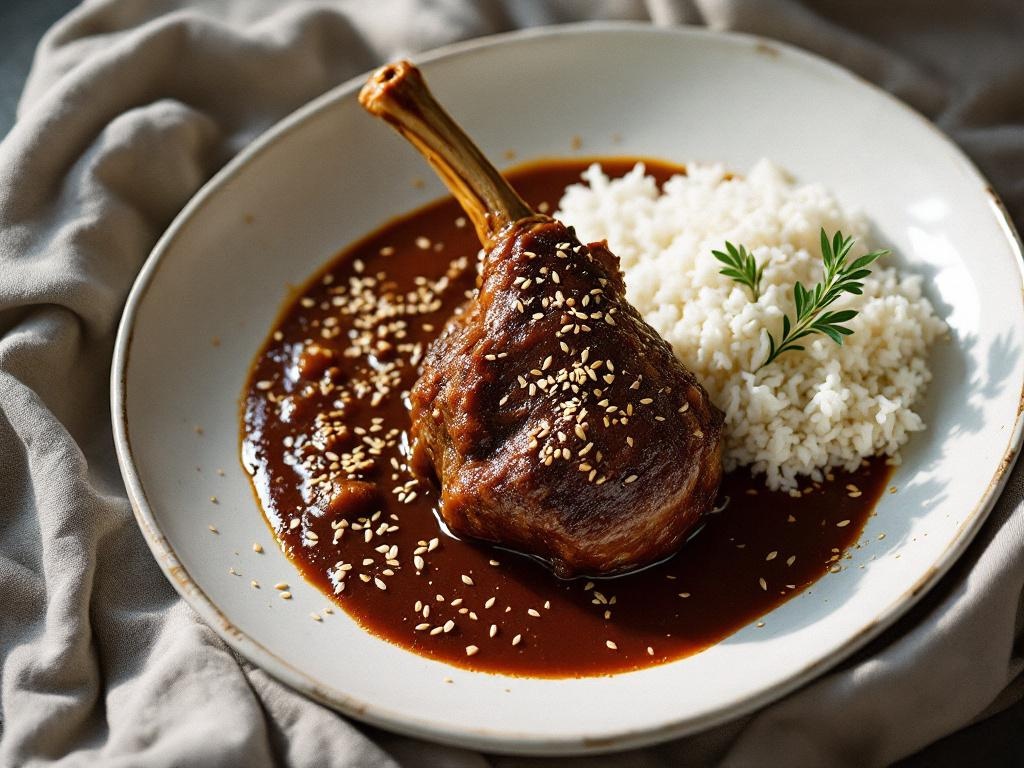
Variations
Lamb shoulder instead of shanks: A bone-in shoulder around 1.4 kg (3 lb) can replace the four shanks. It braised at the same temperature and time but benefits from being pulled into large pieces before serving. The ratio of surface crust to tender meat is lower, which some people prefer.
Chicken thighs: Bone-in, skin-on chicken thighs work well here. Reduce the braise time to 45 to 55 minutes at the same temperature. The mole is the same; only the protein changes.
Beef short ribs: Bone-in beef short ribs, about 1.6 kg (3.5 lb), can substitute for the lamb. Increase the braise time to 3 to 3.5 hours. The fat content in short ribs enriches the sauce differently than lamb — slightly more unctuous, less gamey.
Ancho-only mole: If you cannot source pasilla peppers, use two large ancho chillis in the same preparation. The sauce will be slightly sweeter and less complex but still correct.
Storage and reheating
Transfer cooled shanks and sauce to an airtight container. Refrigerate for up to 3 days. The mole thickens considerably when cold; when reheating, add 2 to 3 tbsp of water to the sauce before warming gently over low heat, covered. Do not boil. The chocolate finish survives reheating if the heat stays gentle.
For freezing: freeze in the sauce rather than separately, in a container with minimal air space, for up to 2 months. Thaw overnight in the refrigerator before reheating as above.
FAQ
Can I make the mole a day ahead?
Yes, and it benefits from it. The fried mole base (steps 3 and 4, before the lamb) keeps refrigerated for up to 3 days. Make it ahead, sear the lamb on the day, and braise as written. Add the chocolate only at the very end, after the braise.
Why fry the blended mole before braising?
A raw blended mole tastes sharp and a little harsh. Frying it in hot oil — what Mexican cooks call "frying the mole" — cooks out the raw pepper taste, deepens the color, and builds a rounded baseline flavor. Skipping this step is detectable in the finished dish.
My sauce tastes bitter. What went wrong?
Three likely causes. First, the pasilla peppers were scorched rather than just blistered; char past a certain point turns bitter. Second, the Mexican chocolate was added when the sauce was boiling. Third, if you used plain dark chocolate without adjusting the recipe, there is not enough sugar to balance the cocoa.
Do I need to strain the mole after blending?
Only if your blender is not particularly powerful. A high-speed blender (Vitamix, or similar) produces a smooth enough sauce. A standard countertop blender may leave flecks of pepper skin; pass through a fine-mesh sieve if the texture is coarse.
How do I know when the lamb is ready?
Insert a thin knife or skewer into the thickest part of the shank. It should slide in with no resistance, like going into softened butter. Additionally, the meat will have visibly pulled back from the shank bone by at least 1 cm (half an inch).
Can I use lamb chops or leg of lamb instead?
Leg steaks or chops lack the collagen of shank or shoulder, so the braising liquid does not develop the same body. You can cook them in the mole, but reduce the braise time to 40 minutes and accept a thinner sauce. For best results, use cuts designed for slow cooking.